Painting, decorating and home improvement tips blog
Feature Walls : How To paint a feature wall
Posted by Adrian
January 14th, 2014
Feature Walls : How To paint a feature wall
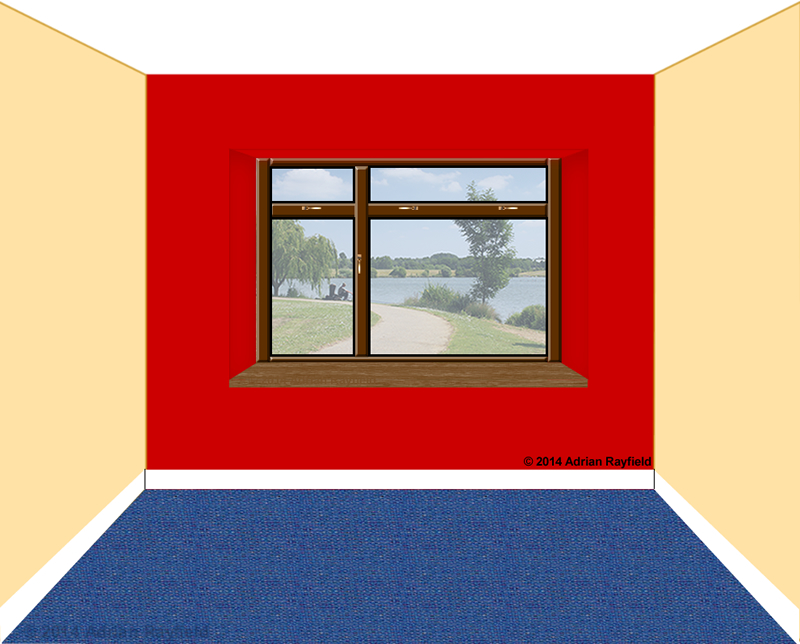
Feature walls have become very popular in recent years, they are a great way of giving a room a new look without the expense of changing everything in a room or completely redecorating. Simply by re-painting the feature wall can transform the look of a room. You can also follow the latest trends simply by re-decorating the feature wall.
Feature walls can be painted or wallpapered, it is personal choice and it will depend on the type of look you are going for.
Sometimes a feature all is called an accent wall, but they are both the same thing.
Deciding on paint for a feature wall
Deciding on what colour paint to buy for a feature wall will be determined by how the remaining walls have been decorated, typically a contrasting colour is used. But if the other walls have been wallpapered you can pick a colour from the paper to use as the feature wall colour.
Once you have decided on the colour for your feature wall you can buy the paint, you can buy ‘Feature Wall’ paint, this is just over a litre in size and should be enough to paint one wall. You don’t have to go this route, you can buy any colour in any sized can of paint. You could even use leftover paint if it suits your needs.
If you are unsure how much paint you will require for your feature wall, give our paint calculator a go, simply fill in the required figures and hit the calculate button and you will be told how many litres you need to by for your given area.
Painting a feature wall
To paint your feature wall, you can either mask the adjoining walls, skirting and ceiling with low tack masking tape, then cut in with a brush around the edge of the feature wall, just overlapping the masking tape but being careful not to paint any other surface. The use a roller to fill in the main wall area. By using masking tape you should achieve a straight line.
If you are confident in cutting in you can cut in without masking up. Cutting in is the term used whereby you use a paintbrush to go up to an adjoining surface, be it a wall, ceiling or skirting boards.
Once you have cut in or painted up to the masking tape and painted the first coat onto your feature wall, allow the paint to fully dry before applying a second coat. When you have painted the second coat you can remove the masking tape, if you used any.
Making a statement
By painting a feature wall you are making a statement, and making this one wall the focal point of a room. You may want to do this to highlight some pictures that are hanging on the wall, you maybe make a fireplace the focus of the room or simply it can give orientation to a room.
Whatever the reason for painting a feature wall, it can quickly and easily transform any room and give a focal point to an area of a room.
Tags: Decorating, Emulsion, Feature, Feature Wall, Paint, Paint Calculator, Painting, Statement, Wall
Posted in Decorating Tips | No Comments »
Colour trends for 2014
Posted by Adrian
December 1st, 2013
Colour trends for 2014
Dulux Colour Futures™ from AkzoNobel have come up with the upcoming trends for colour for 2014, through their international research they have selected a range of colours they think will be in trend throughout 2014, and have picked a dominant colour for the year.
Colour palettes and colour trends for 2014
The colour theme is being called ‘Unlocking Potential’
” we see a world in search of answers, which provides us with an open and exciting palette of colours to inspire renewal in the year ahead.”
Quote from ColourFutures™
The theme consists of the following five colour palettes and colour moods:
- Silent Revolution
- Margin of Proof
- Urban Folk
- Secret Garden
- Do It Now!
What is to colour for 2014
The colour of the year 2014 is……. 90GG 19/151 (also known as Teal).
“A tertiary colour, teal is the combination of primary blue and secondary green which today is used to describe several different tones of this majestic colour. Somewhere between blue and green it has come to symbolise balance, but should be combined with neutral tones and shades of wood so as not to overwhelm a space.”
Quote from ColourFutures™
You can see more of this years colour schemes here:
Dulux Trade website or here:
http://www.colourfutures.com and download the Colour Futures book(PDF).
Paint Calculator
If you would like to use the colour of the year (90GG 19/151) or any other colour you need to buy and need to work out how much you need to buy, use our FREE Paint Calculator.
Tags: 2014, 90GG 19/151, AkzoNobel, Colour of the year, Dulux, Dulux Colour Futures, Dulux Trade, Emulsion, Paint, Paint Calculator, Teal, Trends
Posted in Decorating Tips, News, Resources | No Comments »
How to remove artex
Posted by Adrian
June 4th, 2013
How to remove artex
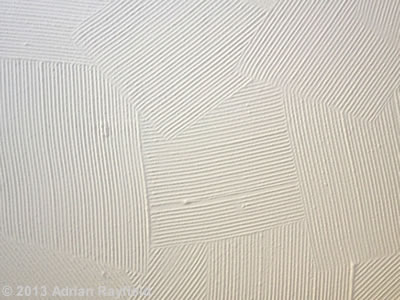
Artex is a decorative finish, you may have it on your ceilings and maybe your walls. There are several popular finishes such as swirl, stipple, broken leather, scroll, circle and bark for the walls. Artex was very popular until the 1990’s were it became less popular in favour of smooth plastered ceilings and walls.
Before the mid-1980’s Artex contained white asbestos to strengthen it. Depending on when your house was build or when Artex was applied in your house will depend if it contains asbestos.
Artex and health issues
If you are unsure if your Artex contains white asbestos or not it is best to get a local firm to test it first, for advice, contact the Environment Agency or your local environmental health department or look at www.asbestoswatchdog.co.uk.
If the Artex is untouched and has been sealed with paint, or the Artex was produced after the mid-1980’s then there shouldn’t be any health risks, but if unsure always get it checked first.
For more information of Artex you can read more about Artex on Wikipeadia.
How to remove Artex from ceiling and walls
First be sure that your Artex doesn’t contain harmful white asbestos, if you are unsure get it checked before doing any removal or disturbing the Artex, or call a local firm to remove it for you.

Once you are sure the Artex doesn’t contain white asbestos you have a couple of options to get rid of it.
You can skim over it with plaster, making it smooth and ready to paint or wallpaper once dry. This option is a quicker and far less messy option, although it may require some scrapping to remove high spots before plastering.
The other option is to completely remove it, this can be done with a scrapper. Make sure you wear protective clothing, goggles and a mask and cover the floor with dust sheets. Use a scrapper to scrape the Artex off, this could take some time, once the worst is off you could use a wallpaper steamer to remove the rest. This will obviously make a fair bit of mess, especially if your removing Artex of the ceiling.
Once you have removed all the Artex you can then plaster or if the ceiling or walls are is in good enough condition paper over them, you may have to fill holes, joins and scrapper marks before this is possible.
If you found this or any other post on the Property Decorating blog, please feel free to leave a comment, share on Facebook, Twitter and Google+. You can also follow us and Like us to find out when we have a new decorating tip go live.
Tags: Artex, Broken Leather, Ceiling, Emulsion, Plaster, Stipple, Swirl, Wallpaper, Walls, White Asbestos
Posted in Decorating Tips | No Comments »